
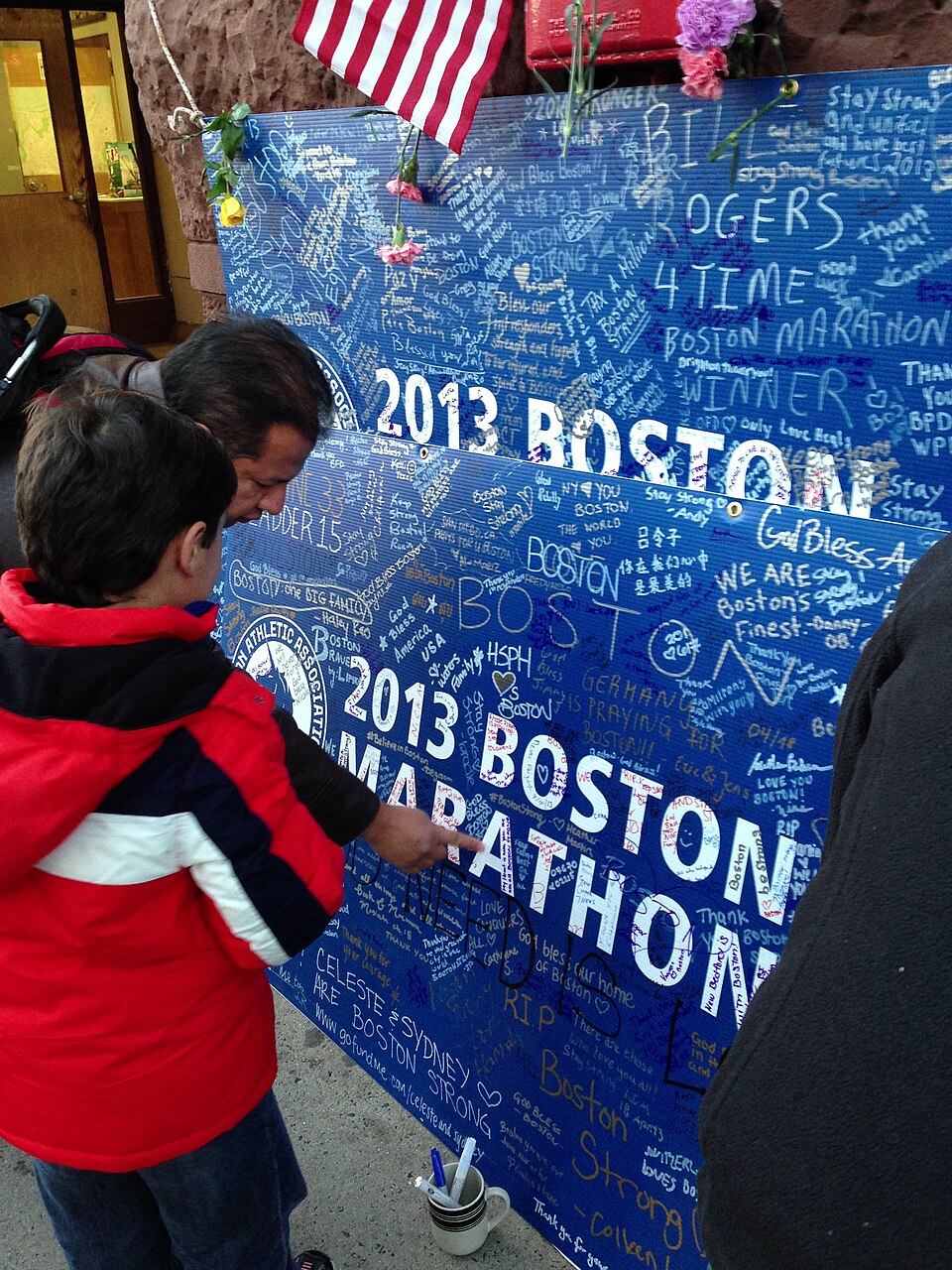
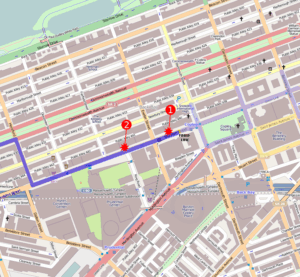
 On April 15, 2013, at approximately 2:49 PM, tragedy struck the 117th Annual Boston Marathon when two homemade pressure cooker bombs filled with nails and other metal shards exploded near the finish line of the marathon in downtown Boston, Massachusetts, as thousands of runners were finishing the race. The explosions resulted in a total of three deaths, and dozens of people were injured; the bombs detonated 12 seconds apart and about 200 yards away from each other. The three fatal victims were spectators Martin Richard, Krystle Campbell, and Lingzi Lu. More than 260 injured suffer injuries ranging from burns to traumatic amputations.
But the impact and scale of this attack go beyond the crime scene. The Boston Marathon is one of the most well-known races in the world, with over 17,000 runners and thousands of spectators. The explosions triggered panic, shut down public transportation, affected thousands of residents, and caused businesses to go into lockdown due to the fear of it happening again.
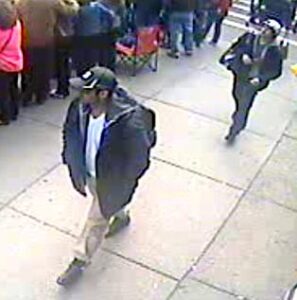
 Law enforcement began the extensive manhunt for the perpetrators of this terrible act of terrorism, the unlawful use of violence and intimidation in the pursuit of political aims. This resulted in the arrest of two brothers: Dzhokhar and Tamerlan Tsarnaev.
Their motivations were tied to extremist ideologies, and they sought to turn a moment of community spirit into a symbolic target against the U.S. government. The Tsarnaevs, who were of Chechen descent, felt a duty to retaliate against the U.S. and their military actions in Muslim countries, like Iraq and Afghanistan. Even though they were not part of any major terrorist group, they were motivated by what they believed was a military attack on their religion.
One of the most interesting factors of this story is that the brothers confessed to learning how to build the bombs from an online magazine related to the Al-Qaeda terrorist group. Originally, the Boston Marathon was not their primary target, but Times Square in New York City was.
After the bombings, the FBI coordinated a multi-agency manhunt. The suspects first shot and killed an MIT police officer, then hijacked a car and, during the ensuing pursuit, threw explosives at law enforcement. In the subsequent confrontation, Tamerlan Tsarnaev was killed, and Dzhokhar Tsarnaev was captured, arrested, and later sentenced to death
This bombing, like many other tragedies, had multiple layers of victimization. The primary victims, of course, were the ones killed and injured directly in the attack and first responders who experienced incredible psychological trauma and witnessed the devastating events. The secondary victims were the loved ones of the primary victims, such as their families and friends, as well as the greater Boston community, who bore witness to the acts and endured a collective fear in the days following the attacks. However, this specific tragedy gave way to a third unique type of victimization, harm which was not directly caused by the tragedy but by the media and public response. During the crazy and somewhat lengthy investigation, Internet forums, such as Reddit and Twitter, tried to be of help in finding the culprits. However, this backfired incredibly, as Sunil Tripathi, a 22-year-old Brown University student who went missing on March 16, 2013, was later found to have tragically committed suicide before the date of the attacks. They were wrongly accused by these online forums of being one of the bombers. Like most information on the internet, these false accusations quickly spread from forums into mainstream media, which subjected Sunil’s already-grieving family and friends to harassment and humiliation from the internet, the community, and the wider world. His case shows how victimization can stem not only from the crime itself but also from societies and the media’s reactions to it.
Routine activities theory highlights how victimization occurs when a motivated offender, a suitable target, and the absence of a guardian — the crowd lacking law enforcement — intersect at the right time and space.
In the case of the Boston Marathon bombing, the offenders would be the brothers, who were motivated by their religious thoughts on the war in the Middle East. A suitable target was present — an event with a dense crowd and heavy media attention. There was also an absence of capable guardians, meaning limited visible law enforcement and other protective measures within the large marathon crowd. Before these attacks, police presence at sporting events largely focused on crowd management rather than counterterrorism measures. After the attack, authorities called for the re-evaluation of public event security measures. These new measures included extra screenings and coordination with other agencies and a greater law enforcement presence to prevent another of these tragedies from happening.
Routine activities theory puts an emphasis on how crime prevention highly depends on reducing opportunity and increasing guardianship. The authority response clearly aligns with the principle which this theory upholds: “strengthening guardianship to reduce the likelihood of victimization.”
 On the other hand, critical victimology theory offers an explanation of how power and inequality, as well as institutional structures, have a say on who we see as a victim and how society responds to harm. It goes beyond the narrow fields of legal definition of victimization, as it includes not only individuals but also communities that are hurt by negative social reactions. In the aftermath of the marathon bombings, Sunil Tripathi was immediately framed as a terrorist suspect due to his similar physical appearance to the bombers. The process of wrongly labeling him one of the bombers was influenced by factors like fear, media failure, and racial profiling. According to the Columbia Journalism Review (2014), journalists and media outlets “abandoned their firewall between all the noise and something trustworthy”; they allowed mere speculation and slander to fill their work, allowing it to replace the verified facts. When applying critical victimology theory to Tripathi’s case, we see that his victimization did not result from direct criminal intent but rather from systematic negligence and bias. This negligence hurt not only Tripathi’s grieving family but also the community around them, which for days viewed the family as also culpable for the tragedy. Critical victimology theory demonstrates how victimhood is socially constructed, as the media and people in positions of power are truly the ones that determine whose suffering is recognized and why.
The Boston Marathon bombing had a lasting impact on families, the overall Massachusetts community, and the families of those who tragically passed away or were injured. The phrase “Boston strong” flooded social media as a way to show support to the victims. Even years later, many continue to struggle with trauma and chronic pain, post-traumatic stress disorder (PTSD) — a condition of persistent mental and emotional stress following psychological shock — anxiety, depression, and other mental health conditions stemming from that day’s events. These ongoing struggles are a stark reminder of how violence can permanently affect individuals and communities. The Tripathi family, who was already going through a traumatic event, had to endure invasive media attention and harassment after the online accusations, generating more trauma and pressure from the media, all of them being victims outside of the crime scene.
The One Fund Boston, an $80 million fund, was created within days of the tragedy and was distributed to support the families and survivors while also covering rehabilitation and counseling to help with long-term recovery (Federal Bureau of Investigation, n.d.). Despite these efforts, the definition of victim remained narrow, as those harmed by misinformation and racial stigma, like Sunil’s family, remained with no compensation, illustrating critical victimology theory’s point that some victims are excluded from socially produced harm.
As for policy and practice implications after the bombing, agencies that host big-capacity sporting events have tightened security measures, implemented better screening tactics, and bettered inter-agency coordination in case something like this should ever happen again. Ensuring that the “capable guardian” those routine activities theory calls for is present and hopefully able to deter perpetrators at these mass gatherings
As for media platforms and accountability, newsrooms, journalists, and other media outlets opted to implement stronger data verification policies and adopt better crisis-time moderations. This has helped acknowledge that misinformation can be a method of victimization and prevent cases like the one of Sunil and his family from happening again.
Finally, guided by the principle of critical victimology, jurisdictions should recognize as victims those who have endured reputational and psychological injury from media failures and institutional neglect.
In conclusion, the Boston Marathon bombing shines a light on how a single act of terror can harm so many lives, even outside of the crime scene. We must widen our perception of what it truly means to be a victim and what it takes to deliver them justice. It is a clear example of what can happen when a community does not have proper guardianship and how the lack of such can be exploited. The targeting of Sunil Tripathi and his family, like many others who have been victimized online, should be recognized and stopped, as it is a clear demonstration of victimization triggered by bias and fear.
The Boston Marathon bombing should remind us that ethical reporting must work alongside traditional law enforcement to protect the innocent. Justice should go beyond punishment to include accountability, prevention, and dignity for victims and their families.
Images used:
- “Boston Marathon Bombing Site/Memorial” by Sarah Nichols is licensed under the Creative Commons Attribution-Share Alike 2.0 Generic license. This image has not been altered.
- “2013 Boston Marathon bombings map” by Anna Frodesiak is licensed under the Creative Commons Attribution-Share Alike 2.0 Generic license. This image has not been altered.
- “Two suspects wanted by the FBI for the bombing.” This work is ineligible for copyright and therefore in the public domain because it consists entirely of information produced by an automated system. This image has not been altered.
.jpg)

