In 2020, the COVID-19 pandemic paused the way people went about their daily lives. Adults switched from in-person work to remote work, and similarly, students had to learn how to ‘go to school’ from their bedrooms. The switch from active, face-to-face learning to isolated online education disrupted many of our traditional routines that integrate socialization and focus.
In the transitional process, students and adults alike turned to short-form video content such as TikTok, Instagram Reels, and YouTube Shorts for stimulation and connection during a dark time. Five years later, educators have reported a troubling trend: shorter attention spans, lower tolerance for delayed gratification, and a constant pull toward screens.
At the root of this issue is the concept of instant gratification, which refers to the tendency to prefer an immediate reward over a delayed but often greater reward. Short-form videos exploit this tendency through the rapid dopamine hits, training our brains to expect constant stimulation. Which, as a result, has allowed doom-scrolling to become a normalized behavior, reshaping how we focus, learn, and interact. So, while COVID-19 may no longer be a dominant headline, the attention crisis it amplified remains embedded in our educational systems. The pandemic’s digital shift has not only redefined how we learn but also how we socialize and process information, leading to long-term sociological and educational implications.
Socialization with COVID in the Classroom
 The COVID-19 pandemic disrupted more than lesson plans; it eroded the very social architecture of schooling. Classrooms serve not just to teach math or language, but to cultivate cooperation, emotional regulation, and peer interaction. Through the lens of Durkheim’s functionalism—where we see a macro view of how the parts of society maintain stability — we understand that schools act as a hub for societal microcosms, where students internalize shared norms and social responsibility. But during the pandemic, remote learning fractured this essential role.
Michigan Medicine conducted research that showcased the effects remote learning had on children. Children learning remotely exhibited more behavioral problems, hyperactivity, and peer-relationship difficulties compared to in-person learners. These students also showed lower social engagement and defiance in academic tasks, showcasing the signs of a weakened relational structure.
From a symbolic interactionist perspective — a micro view of how society is the product of interactions between people, which occur via symbols that have distinct meanings — a classroom is meant to be constructed through gestures, tone, and mutual gaze, all of which are elements that largely disappeared in virtual settings. This loss of nonverbal communication disrupted how relationships and learning were co-created. The effects extended beyond behavior; BMC Public Health found that during lockdown, primary schoolers reported increased loneliness and lower social support, which are closely correlated with symptoms of depression and anxiety.
These realizations are particularly concerning when this experience has happened across educational levels. Boston University’s Wheelock College documented that students “relied on classmates for peer modeling,” but during remote learning, they were “not interacting … in a meaningful way.” Without access to in-person social models, many felt deeply isolated. This correlates to how social-emotional skills declined significantly during the pandemic: loneliness increased, face-to-face contact dropped, and students felt emotionally distant, even if they were connecting digitally.
These findings illustrate how the pandemic weakened educators’ capacity to act as social integrators. A role that is fundamental to maintaining shared norms, peer engagement, and structured attention.
The Rise of Short-Form Content and its Dopamine Boost
The explosion of short-form content platforms like TikTok, Instagram Reels, and YouTube Shorts has conditioned both students and adults to crave rapid and high-reward bursts of content. The concept behind the instant gratification theory is that the brain’s dopamine system responds to novelty and reward. Short videos deliver both in seconds, creating a dopamine feedback loop that favors scrolling over sustained focus. This constant stream of stimulation trains our brains to expect fast, bite-sized bursts of reward rather than having a sustained attention span.
 From a psychological perspective, B.F. Skinner’s theory of operant conditioning suggests that behavior is shaped by its consequences. Skinner says that when an action is followed by reinforcement, we’re more likely to repeat it, and when it’s followed by a punishment, we learn to avoid it. His process helps explain how habits form and how we are motivated at school and work. This is amplified by how TikTok operates its algorithm. TikTok creates a similar effect to Vegas slots, creating a digital slot machine: every swipe is a chance to “win” a funny, shocking, or emotionally satisfying video. That reinforcement schedule conditions users to keep scrolling, and over time, individuals become accustomed to fast positive reinforcement instead of the delayed ones. Sociologically, this shifts a society’s expectations for how quickly stimulation, such as learning, should happen.
Media sociologists also tie this trend to George Ritzer’s idea of McDonaldization, specifically the principles of efficiency and predictability. Short-form content delivers information quickly, consistently, and in a familiar structure. But while efficient entertainment seems convenient, the long-term effect is that anything slower, such as classroom lectures, long readings, or sustained discussions, feels frustrating or “boring” by comparison. This is showcased in studies such as the one from a BBC Future article in 2024. This study indicates a measurable decline in attention spans across age groups, especially among Gen Z. This behavior shows what psychologists call attention fragmentation, which is an adaptation to a hyper-stimulated digital environment rather than a natural cognitive decline. So, teachers now must compete with algorithms for the attention of their students, creating a society where technology, which was once a learning and teaching aid, is now an agent of cultural change in how we process and value information.
Different Educational Levels, and their Different Effects
The attention crisis has manifested differently across educational stages; this varies from foundational learning in elementary schools to the self-directed demands of higher education. Which shows how the nature of students’ struggles varies from elementary through university, revealing how different developmental demands collide with the aftershocks of the pandemic.
In elementary schools, teachers have reported missed opportunities for developing self-regulation and focus, and they note shorter attention spans and higher impulsivity. Many younger children missed crucial years of early socialization, moments where routines, turn-taking, cooperative play, and emotional regulation are taught not through lectures, but through daily repetition. For example, an article from The Hechinger Report notes that some teachers describe having to “re-teach kindergarten behaviors” to third graders because foundational social norms were interrupted. From a Durkheimian perspective, this is a breakdown in the school’s earliest function, which teaches children “how to learn” and how to behave within a shared moral order.
In middle and high schools, however, the crisis takes on a different shape. Adolescents are developmentally wired for identity exploration, peer approval, and social comparison, all of which were intensified by a pandemic spent online. Teens nowadays must divide their cognitive energy between schoolwork and the constant pull of digital interaction, normalizing multitasking as an everyday survival strategy. Sociologically, this creates a symbolic tension between social capital (online recognition, likes, and visibility) and academic capital (grades, achievement, and future opportunities). The classroom becomes a site where these competing value systems clash.
In college and university settings, the struggles are more internal than behavioral. Higher education requires self-directed learning, long-term planning, and sustained concentration, all skills that suffered during years of fragmented digital engagement. Doom-scrolling has become a common form of procrastination, with students aware of the problem but unsure how to interrupt it. Professors know of the declining reading stamina, surface-level participation, and decreased retention, pointing to what sociologists might call a shift in cultural capital.
Across all levels, the attention crisis reveals how technological habits acquired during isolation have shaped, and in some cases distorted, age-specific developmental milestones.
Conclusion
Nearly five years after the lockdown, classrooms still reflect the habits students developed in isolation. The instinct to scroll, the craving for instant stimulation, and the discomfort with silence or sustained focus. These patterns didn’t disappear when schools reopened; they simply moved with students into learning environments that were never built to compete with constant digital reward.
Instead of focusing only on restriction, schools can implement reforms such as project-based learning, which rewards creativity, collaboration, and deeper thinking rather than rote memorization. Solutions such as attention literacy programs, helping students understand how algorithms shape behavior, and giving them tools to regulate screen time. Learning environments that feel purposeful, not punitive. And a curriculum that connects material to real-world experiences, giving students a sense of relevance and agency. These strategies move away from “stop doing X” policies toward “here’s why learning matters” approaches. If the goal is long-term attention, schools must repair their students’ motivations, not just try to eliminate the cause of their distraction.
If schools can reconnect students to why they learn, not just what they learn, then attention won’t be a crisis to solve but a capacity to rebuild. And in that rebuilding, there’s a chance to make education stronger than it was before the pandemic ever began.
Mercado is a guest blogger at UITAC Publishing. UITAC’s mission is to provide high-quality, affordable, and socially responsible online course materials.
Images used in this blog:
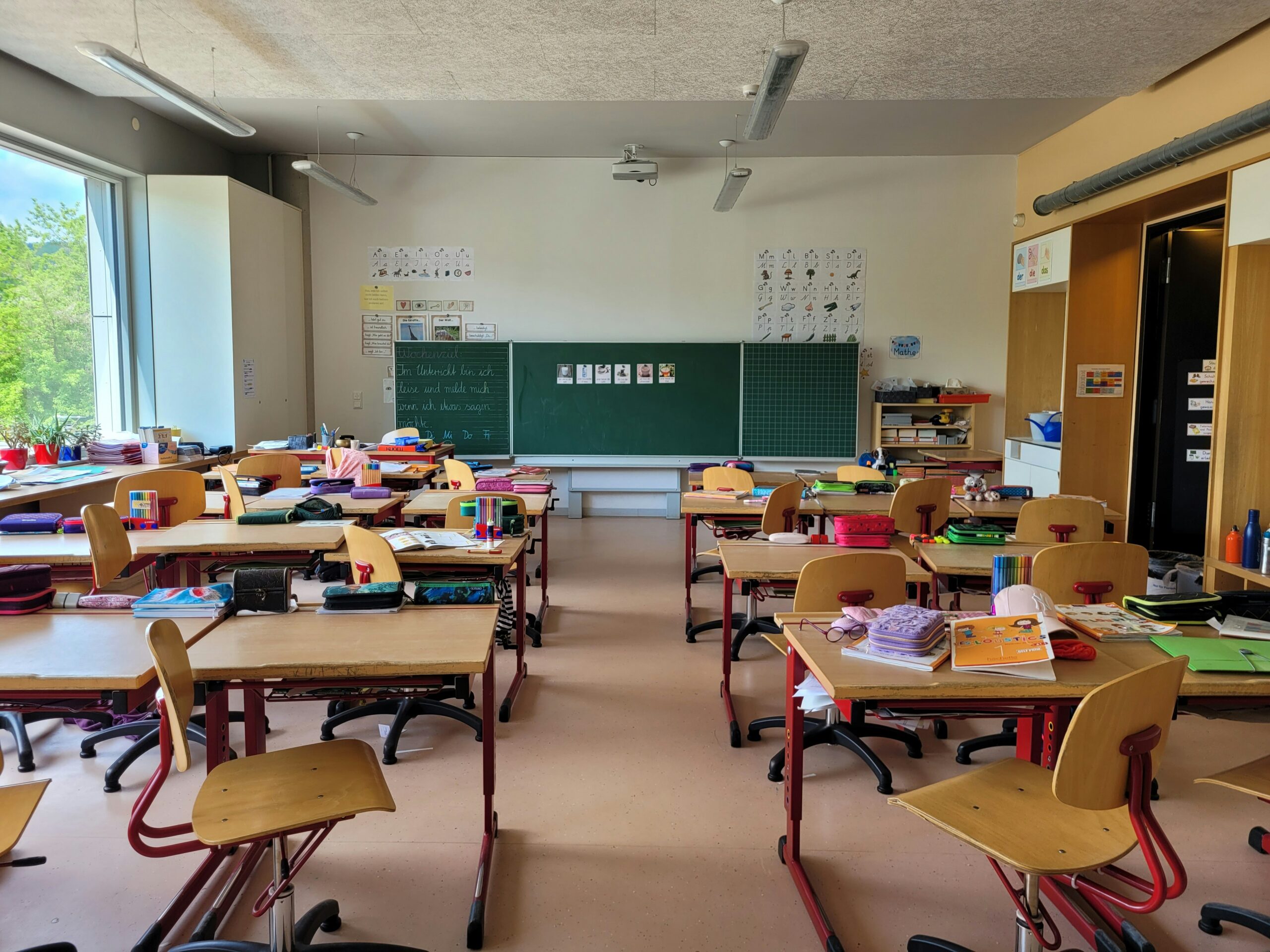
- “Classroom in an elementary school in Germany” by Nathan Cima on Unsplash is free to use under the Unsplash License. This image has not been altered.
- “Girl With Facemask Writing on Notebook” by Antoni Shkraba Studio on Pexels licensed under Creative Commons Zero (CC0) license. This image has not been altered.
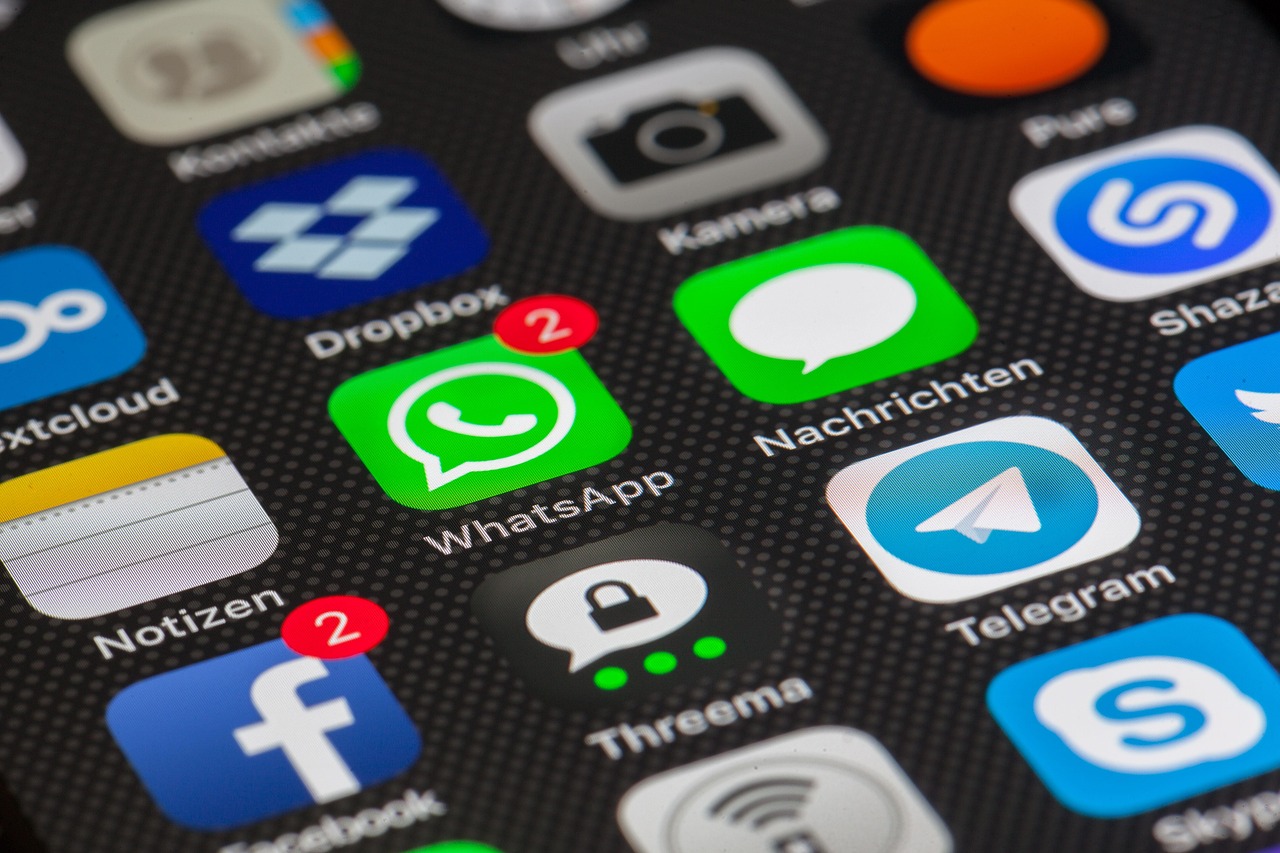
- “Checking message status” by Camilo Jimenez on Unsplash is free to use under the Unsplash License. This image has not been altered.