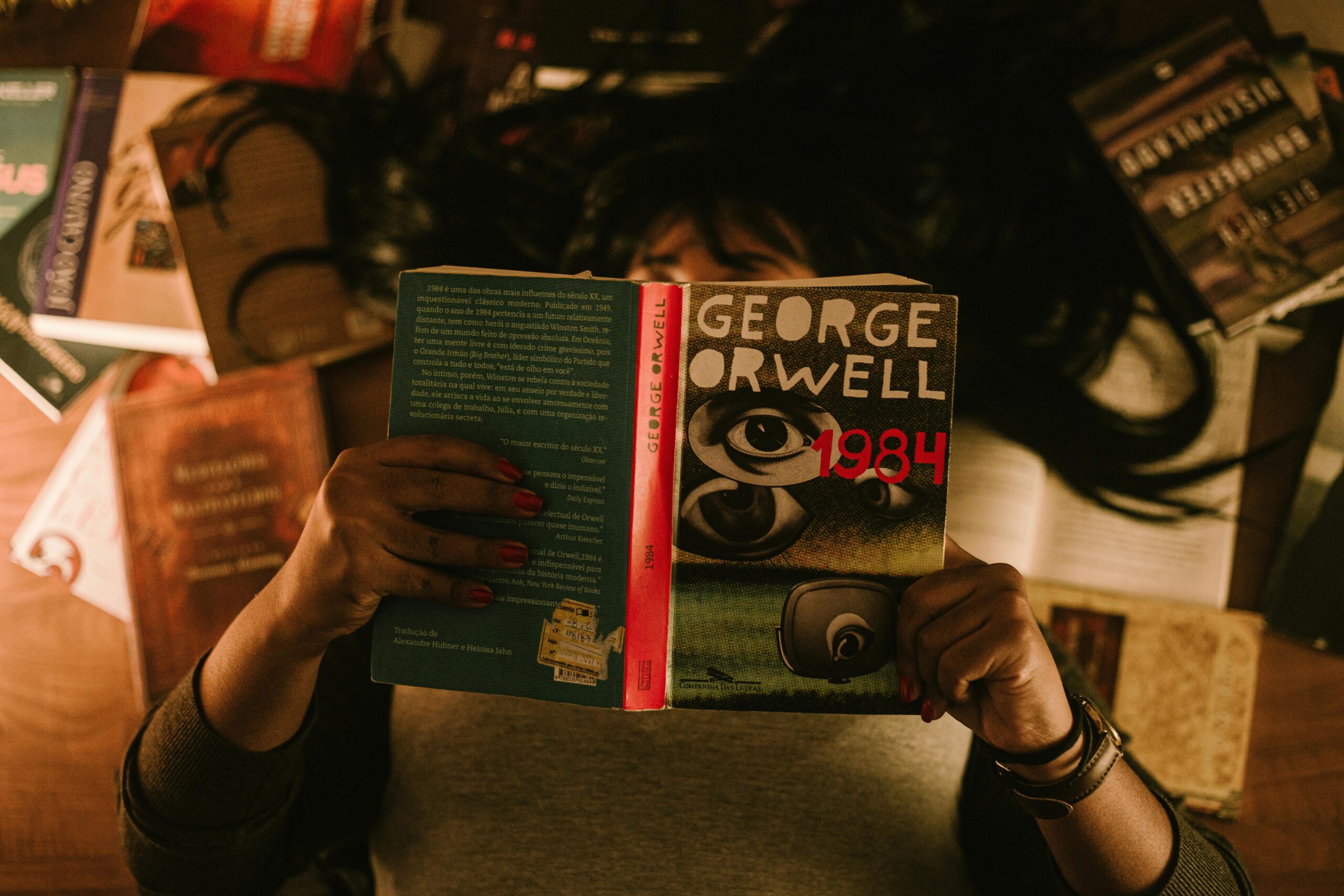
Dealing with diverse ideas and people seems to be constantly discussed throughout United States history. Contemporary discussions oftentimes focus on the lack of diversity when it comes to political ideologies. It has been said that colleges across the country have a liberal bias. This is said to be the attitudes of the professors and the students. A worry about “indoctrinating” students continues to be an issue brought up mostly by the political right. According to a conservative and libertarian think tank, the Goldwater Institute, conservative students voice concern that they feel they must keep opinions to themselves oftentimes on a liberal campus that might cause discomfort among their peers. Those on the right may argue that a college is a meritocracy or, at the least, should be one. Meritocracy is a system that fosters and rewards personal effort, ability, and talent through competition to determine social standing (UITAC). The presence of the late Charlie Kirk on college campuses is one extreme example of a non-traditional perspective being allowed to interact with college-aged young adults. These days, there is a big political divide among students. Some would be willing to pay more to see fewer students on campus with a differing political ideology from their own.
Roots of diversity on campuses
 Colleges have traditionally been exclusive in the past in the U.S., as far as who could teach and who could attend these institutions. In the grand picture of human history, universities and centers of learning serving people of Africa, China, India, and Greece had no such restrictions. Higher education in the U.S. was once the privilege of a select few wealthy white male students. It was rare for women to be present, and oftentimes they could not even earn an actual degree. Of course, separate institutions were created by and for African American students, known as Historically Black Colleges and Universities (HBCUs), and quotas at institutions for Jewish students were prevalent. Worries surrounding extreme views on college campuses have been around for years, particularly during the 1960s. This is where many agree students have the right to discover different perspectives and to be challenged intellectually. These days, skewed representation in higher education as far as political ideologies are concerned has gained steam.
Concerns about change
 Concerns about activism and ideology leaning left and taking over campuses have been cited by the right in the past. William F. Buckley’s 1951 book God and Man at Yale was an early alarm to the bias against capitalism and individualism supposedly rampant on campus, both of which he considered to be very American ideals. However, a perhaps more pivotal moment came in 1971 when a lawyer, Lewis Powell, penned a memo to the head of the Chamber of Commerce of the U.S. This memo, known as the Powell memo, claimed that businesses were losing the soul of America and needed to regain ground. In the memo, he criticized college campuses, the pulpit, the media, and literary journals for spreading anti-capitalist rhetoric. This gave rise to a wave of lobbying and think tanks pushing a conservative agenda. We see this now in the form of the Heritage Foundation and Turning Point USA. Turning Point USA, the right-wing nonprofit organization, aims to identify, educate, train, and organize students to promote the principles of freedom, free markets, and limited government. In addition, the group keeps a watchlist of professors who discriminate against conservative students or push “leftist propaganda” in the classroom. A concerned student at Texas A&M University filmed a professor defending the legality of discussing gender identity during class. The student was allegedly concerned about the content of the lecture being against the law. This professor was subsequently fired, though the university committee sided with the faculty member, and the president of the university resigned.
Changes to come
We see more women attending college and fewer men, a stark contrast from just a few decades before. A study done in 2007 found that nearly half of faculty members ranging from community colleges to the Ivy League were actually politically moderate. Additionally, when comparing the 25 most liberal colleges in the U.S. versus the 25 most conservative colleges, the data found the conservative schools to have an acceptance rate average of 75 percent as opposed to the 53 percent average for liberal schools. If this is still the case, would it not be easier for conservative students to attend conservative-leaning schools? Conflict theory is a sociological perspective emphasizing the role of political and economic power and oppression as contributing to the existing social order (UITAC). Those with more conservative views through a conflict theory lens perhaps would agree that many colleges today simply reflect a more left-leaning elite that exists outside their walls. In what seems like a reaction to this attitude, the University of Austin (UATX) is a new type of school that tries to frame itself as a true truth-seeking institution to rival the traditional Ivy Leagues of the northeast. Its founders, including the new editor-in-chief of CBS, Bari Weiss, aim to make students feel like they can say what they feel as opposed to the unfriendly mainstream higher education. However, critics of the school claim it is nothing more than a right-wing university disguised as free speech.
The timeline of events throughout all of U.S. history involves the diversification of schools, specifically, higher education institutions. Discrimination against minorities and women, the prevention of them from joining, and the inability to earn a degree from these places were the norm in the U.S. When we see the playing field begin to be leveled, we see concern from certain people and groups about voices being drowned out; these voices being drowned out represent a majority that is no longer present. The concern of a lack of conservative voices is a new phenomenon. The number of conservative faculty has been declining since the late 1960s. This coincided with the aftermath of major civil rights legislation and the rise of Nixon. Could the decline of conservatism on college campuses be the result of educated people realizing modern conservatism does not align with their education?
Dayal is a guest blogger at UITAC Publishing. UITAC’s mission is to provide high-quality, affordable, and socially responsible online course materials.
Images used in this blog:
- Stanford, University, Campus image by Toshiharu Watanabe is licensed by Pixabay and is free to use. This image has not been altered.
- College, Buildings, University image by Marian Okal is licensed by Pixabay and is free to use. This image has not been altered.
- University, Lecture, Campus image by Nikolay Georgiev is licensed by Pixabay and is free to use. This image has not been altered.