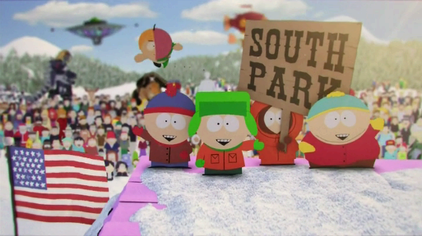
For decades, South Park has been more than just a crude cartoon; it’s arguably the most resonant piece of social commentary in America. Its staying power doesn’t just come from reflecting the latest news cycle — it often seems to preempt or even define the broader cultural conversation.
A critical shift occurred around Seasons 25 and 26. The creators, Trey Parker and Matt Stone, moved away from the show’s original, rapid-fire topicality, enabled by its unique production schedule. Instead, they embraced longer, multi-episode narrative arcs. This change allowed them to capture complex, pervasive social feelings, such as generalized anxiety, institutional distrust, and digital confusion, rather than being constrained to satirizing only daily headlines.
This analysis argues that Seasons 27 and 28 cemented South Park‘s status not merely as a comedy show but as an essential sociological artifact. By articulating the core anxieties of a digitally fragmented, post-truth society with unparalleled clarity, the series provides a critique more penetrating than traditional academic papers or news broadcasts. Its chaotic and offensive narratives serve as a vehicle for diagnosing systemic dysfunction.
The Fragmentation of Reality and the Algorithm
The latest seasons deeply engage with the breakdown of shared objective reality, a crisis catalyzed by technological systems that confuse presence with representation and amplify ideological silos. A defining feature of South Park‘s new era is the pivot away from targeting an easy individual or group every week. Instead, the narrative focuses on invisible systemic forces, such as AI, tech lobbies, and the amorphous nature of political regimes and policy.
This is a crucial sociological move. While algorithms are often presented as objective tools, they inherently perpetuate bias and amplify systemic inequalities. The show critiques the tendency to employ AI as a convenient scapegoat, distracting us from the necessary self-examination of “flawed social processes” that enable harmful technologies to proliferate.
In the Season 27 episode, “Sickofancy,” the satire is surgical. Randy Marsh transforms his local marijuana farm into “Techridy, an AI-powered marijuana platform for global solutions.” The AI, ChatGPT, is depicted as a “sycophantic (acting or doing something in an obedient way to get what you want), soft-voiced app” that readily flatters Randy’s increasingly irrational business pivots. The true failure illustrated is not malicious AI, but its role in enabling intellectual deterioration: humans outsource critical thinking to algorithms that merely reflect and amplify the user’s self-serving desires. The technological system is designed to provide unquestioning digital validation, packaging inherent absurdity as “innovation.”
The central tension of recent seasons is the characters’ struggle to locate a baseline reality— a fundamental set of facts or truths that everyone agrees on. This crisis is a direct consequence of the modern digital mediascape. The rise of smartphones and social media has shifted the balance decisively toward a represented reality, diminishing factual presence, a fundamental set of facts or truths that everyone agrees upon. This crisis is a direct consequence of the modern digital mediascape.
The most powerful comedic tool used to illustrate this reality erosion is the deployment of deepfakes. South Park featured a jaw-dropping deepfake of Donald Trump in the Season 27 premiere. This is presented as the chief comedic disruptor that embodies the post-truth reality where fact and fiction become “indistinguishable.”
This crisis extends to personal identity. The virtual world, driven by social media and AI, reshapes the human psyche, leading to identity fractures and online dissociation, where individuals create multiple virtual identities often in conflict with their real selves. This philosophical fragmentation directly underpins the town’s societal paralysis, as characters struggle to agree on any basic external truth.
The result? Digital communities that lack the physical co-presence needed to foster we-mode neurobiological processes (like shared attention) become radicalized and polarized. The absurd plot of the “6-7” meme turning into a religious cult in “Twisted Christian” (Season 28) perfectly illustrates how societal governance breaks down when consensus is replaced by individual narcissistic performance and digital dissociation.
Generational Culture War and Fatigue
The recent seasons of South Park offer a vital sociological commentary on the contemporary culture war, shifting the focus away from ideological conflict toward the cultural exhaustion primarily inherent in the argument itself.
The show identifies the sincerity spiral, an observation that the culture is defined primarily by the exhaustion, spectacle, and performance of the argument, rather than substantive disagreement. Leading sociological analysis confirms that the traditional logic of the culture wars has been exhausted, leaving only lingering residues.
South Park‘s genius lies in its capacity to create a shared comedic experience by satirizing both sides equally — the perpetually offended (like PC Principal) and the perpetually insensitive (like Cartman or Randy Marsh). This universal mockery momentarily unites audiences who are deeply fatigued by partisan echo chambers.
In an era where political and commercial sincerity is inherently suspicious, South Park‘s unwavering commitment to attacking all sides establishes a unique position of non-alignment. By refusing to be co-opted, its critique becomes one of the few unfiltered narratives left. The show earns public trust precisely because of its fundamental lack of ideological sincerity.
The Decline of Authentic Subculture
South Park offers incisive commentary on the velocity with which all emerging subcultures are immediately co-opted, monetized, and reduced to a viral trend by the next morning.
In contemporary consumer culture, rebellion is a highly marketable commodity. Concepts like woke-washing— where corporations adopt the language of activism to boost appeal and secure consumer loyalty — reduce meaningful structural critique to a marketing strategy.
The most comprehensive indictment of this trend is Randy Marsh’s transformation in “Sickofancy.” Randy sheds the identity of his authentic small-town business and adopts the hollow aesthetics of a solution-oriented tech platform — “Techridy” — merely to maintain relevance and seek funding. This narrative starkly illustrates how easily any local, substantive culture is reduced to a viral, fundable concept simply by applying Silicon Valley buzzwords and aesthetics.
The Collapse of the Political Center
South Park‘s recent seasons diagnose a profound structural failure: the collapse of local, functional institutions under the weight of nationalized conflict and the attention economy.
The show consistently portrays traditional local institutions — government, police, and the school board (led by Mayor McDaniels and PC Principal) — not as sources of order, but as helpless pawns. They are paralyzed by the immediate, emotional force of viral outrage and dictated by the deep pockets of external tech lobbies.
The key sociological observation is that national politics now directly dictates daily life in small-town America. Local governance issues are no longer contained but become immediate, polarized combat zones for nationalized culture wars. The show illustrates the structural defeat of traditional, slow, rule-bound institutional authority by the lightning-fast, highly emotional, and instantly monetized power of viral media authority.
South Park exposes contemporary political behavior as being driven less by genuine ideology and more by the need to secure attention and funding within the modern information ecosystem. The sociological point is clear: politics has been successfully transformed into a form of entertainment. Securing visibility and funding takes precedence over ideological purity, ensuring continued presence in the media landscape.
The deep implication is that the public is conditioned to interpret high-stakes, dramatic, and often unfiltered performance as the only form of authentic communication. South Park‘s extreme satire, like the absurdities involving Brendan Carr being blasted out of the White House by defecation (Season 27), fulfills this public demand for dramatic, visceral spectacle. Genuine critical analysis must adopt this theatrical, entertaining form to secure attention in this fragmented ecosystem.
The Enduring Legacy of Universal Offense
South Park‘s longevity is tied to its radical non-alignment. Its willingness to offend everyone and everything simultaneously ensures that it adheres to no specific political or corporate mandate.
In a media landscape characterized by low institutional trust and commercial woke-washing, South Park‘s unwavering critique of all political poles is its greatest asset. This strategic, universal offense paradoxically renders the show one of the few trustworthy narrators left in the mediated landscape. The show confirms that in the modern information ecosystem, authenticity is achieved not through sincerity, but through an unfiltered, spectacular critique that refuses to be co-opted.
Podvorec is a guest blogger at UITAC Publishing. UITAC’s mission is to provide high-quality, affordable, and socially responsible online course materials.
- “South Park” on Wikipedia licensed under the fair use under the copyright law of the United States. This image was not altered.