The Role Social Media Influencers Have on Self-Identity
Over the past two decades, social media has not only reshaped society as a whole but also the concept of self-perception. In 2000, there was a rise of social media. With the launch of Facebook in 2004, social media was created to build a new approach to community, connectedness, and socializing. This new way of connecting expanded with the launch of YouTube, introducing the ability for people to document their own lives for others to watch. By 2018, 2 billion people were using Facebook — further revolutionizing how we stayed connected.
With knowledge now at our fingertips, the expansion of accessible knowledge spans across cooking, gaming, “do-it-yourself” videos, and anything else that is typical lifestyle living — creating an emergence of “micro-celebrities,” better referred to as “social media influencers.”
Who is an Influencer?
 A social media influencer is referred to as an individual who has a large online following based primarily on their personality, skills, hobbies, and interests. All of which their audience can either relate to or have an interest in consuming their content (RTC Networks). As influencers continue to have a significant impact on our society’s pop culture, they now occupy a place of influence that in the past was solely seen through typical celebrities.
While family and peers previously held such a significant role in socialization and identity, social media influencers are now shaping lifestyle expectations, behavior, and values while also teaching “unwritten rules” on what is appropriate or acceptable, much of which came from family and community agents in the past. Social media platforms have become a dominant force in shaping self-identity. A 2021 study found that two in three teens follow influencers for a variety of positive reasons, such as entertainment, activism, and companionship. However, in the same study, it was found that youth were more likely to be exposed to unhealthy products and themes through influencer promotional activity. This created an increase in youth comparison while promoting an unrealistic ideal. The ability for normal individuals to be able to curate their self-identity through online platforms has led to an increased impact on identity development.
The Consequences of Influencing
Unfortunately, influencers often blur the lines between what is real and what is entertainment, leading to an increase in consumerism and materialistic desires.
Through the complexities of the online world, people in general, and youth in particular, are socialized to model the behaviors they are consuming online by adopting the opinions and beliefs of the influencers they are following, as well as their ethical and moral stances. The comparison culture that is fostered through the heavy load of images and posts that showcase seemingly perfect lives can often lead to identity struggles. Online users may feel compelled to the online standards they are perceiving, causing a fragmented sense of identity.
Incorporating Dramaturgy
 Theorist Irving Goffman is widely known for his approach to identity and the self. In short, Goffman argued that the process of establishing social identity came primarily through presenting ourselves as we believe the world must see us in order to avoid stigma, through what he called “dramaturgy” and the need to control how others perceive us. In essence, he argued that as social beings, we are constantly putting up a “front” to project a certain image of who we are, and we are all engaging in social deception. However, during Goffman’s time, his exploration was through real-life experiences and moments, not the curated, edited moments of success and happiness that are often presented through social media. In today’s day, the distance between performer and audience changes the dynamics of how the self is created and concealed. Today’s literature argues that online identity creation leads to a new adoption of personas that challenges Goffman’s theory, as one is able to curate their self-identity rather than perform it in real-time.
However, as identities are built heavily based on what we are seeing in the lives of others, this may lead to feelings of being inadequate or feelings of being an imposter. On the other hand, social media has provided a place for people to become part of a community that they can relate to and even affirm their own feelings of belonging.
Continuing Impacts
Without a doubt, the significant impact social media influencers have on self-identity comes from relatability to their core audience. While identity formation can oftentimes be confusing, especially at a young age, the community provided through social media influencers can both shape this journey and provide validity. In a time where social media is now connecting us to people around the world, celebrities, politicians, and the like, there is no stopping the continuous influence this space is having on self-identity. However, researchers are now beginning to understand this complex dilemma and advocating for better online control and parental guidance.
Adame is a guest blogger at UITAC Publishing. UITAC’s mission is to provide high-quality, affordable, and socially responsible online course materials.
Images used in this blog:
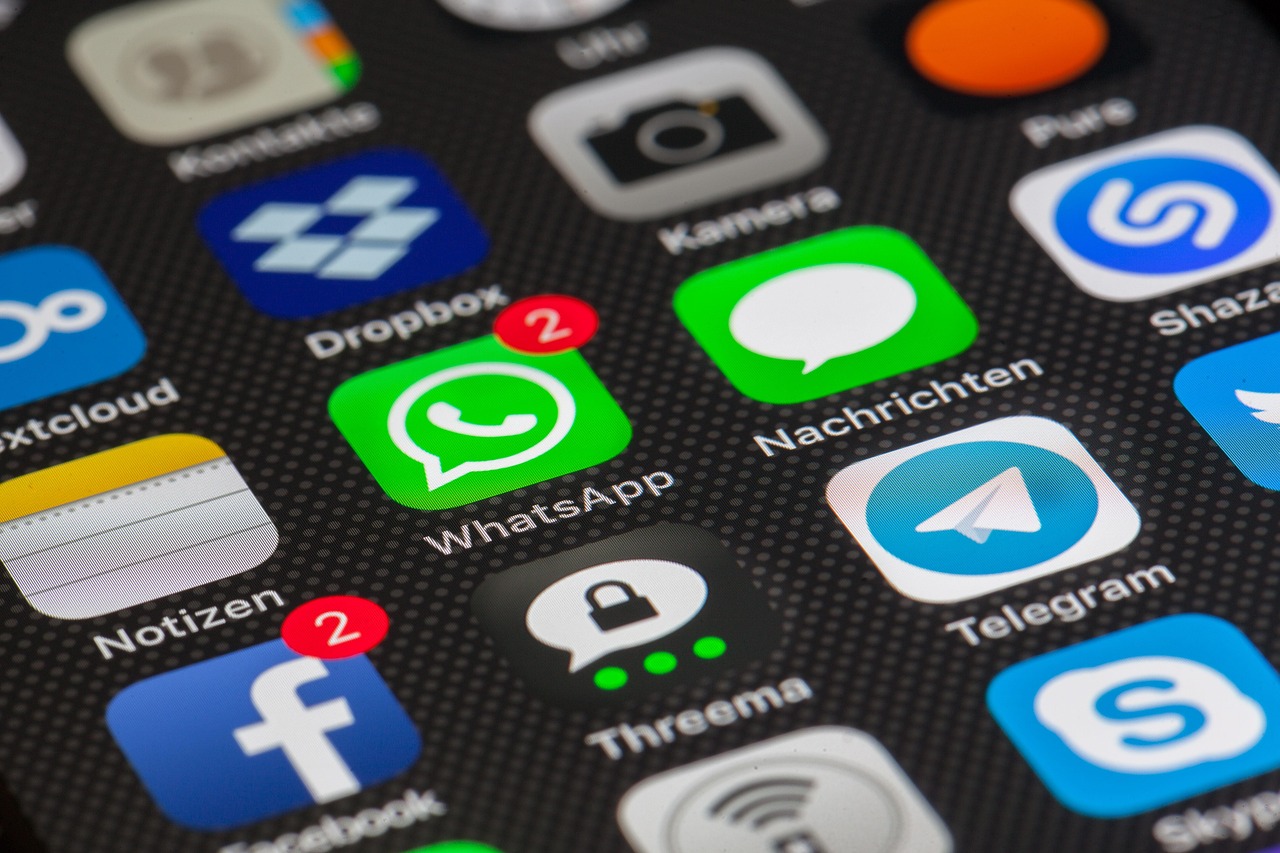
- “Internet, Whatsapp, Smartphone image” by LoboStudioHamburg on Pixabay is licensed for Free to Use. This image has not been altered.
- “Arrows, Colorful, Direction royalty-free stock illustration” by geralt on Pixabay is licensed for Free to Use. This image has not been altered.
- “Group of People Having A Meeting” by cottonbrostudio on Pexels is licensed for Free to Use. This image has not been altered.